The Order You Stack a Sandwich Matters
A sandwich may be simple to prepare, but its structure determines whether it holds together or falls apart after the first bite. Tomatoes can slide out, lettuce can wilt, and sauces can soak through the bread. The ingredients matter, but so does
the order in which they are stacked.
Begin with the bread. Soft bread absorbs moisture quickly, especially from tomatoes, pickles, dressed greens, and warm fillings. Lightly toasting it creates a firmer surface, while a thin layer of butter, mayonnaise, cream cheese, mustard, or another spread helps form a moisture barrier. Cover the bread from edge to edge for better protection and more
consistent flavor.
Place a stable ingredient against the bottom slice. Cheese, sliced meat, a firm omelet, or a compact layer of chicken salad creates a solid base. Loose or slippery ingredients, such as dressed greens or tomato slices, should not sit directly on the bread.
Tomatoes add acidity, sweetness, and juiciness, but they are often responsible for soggy bread. Pat the slices lightly with a paper towel, season them just before assembling, and place them between ingredients that can hold them in place. In a BLT, for example, tomato is more secure between the lettuce and bacon than against the bread.
Lettuce can add crunch while providing another moisture barrier. A broad, dry leaf works well near the bread when the sandwich contains juicy fillings. Shredded lettuce is more likely to fall out, so it is best tucked into the middle and secured by meat, cheese, or a spread.
Crisp ingredients also
need protection. Bacon, fried onions, chips, toasted nuts, and crunchy vegetables soften when pressed against sauces or juicy produce. Keep them separated from wet ingredients whenever possible.
Cheese can help hold a sandwich together. A slice placed above or below loose fillings acts like a lid, while melted cheese
binds meat and vegetables in hot sandwiches. In a grilled sandwich, cheese near both slices of bread can help contain the filling.
Use sauces with restraint. Too much can overpower the other ingredients and make the sandwich difficult to handle. Thick sauces are easier to control than thin ones and should be spread
on the bread or over a firm ingredient rather than poured onto lettuce or vegetables.
Ingredient shape matters, too. Overlap flat slices slightly instead of piling them in the center. Spread chopped fillings evenly to the edges, and avoid creating thick or uneven sections that make the sandwich unstable.
Temperature can also affect texture. Hot meat wilts lettuce, while steam from warm fillings softens bread. Let very hot ingredients rest briefly before assembling unless the sandwich will be served immediately.
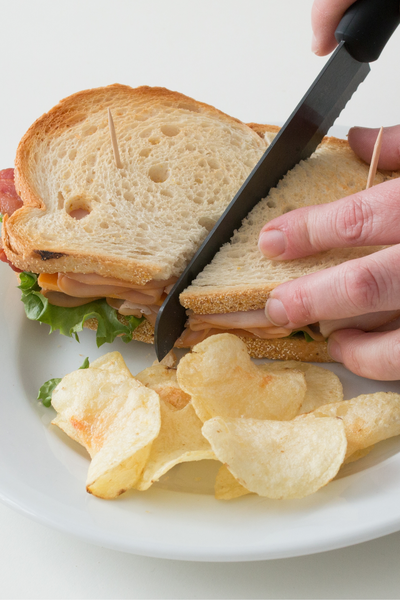
Once assembled, press the sandwich gently with the palm of the hand to settle the layers.
Cut it with a sharp serrated knife using a sawing motion. For a tall sandwich, place two toothpicks on either side of the cut to keep the halves intact.
There is no single stacking order that works for every sandwich. The guiding principle is simple: firm ingredients support loose ones, dry ingredients protect the
bread, crisp ingredients stay away from moisture, and slippery fillings need something to hold them in place. When every layer has a purpose, the sandwich stays intact and tastes balanced from the first bite to the last.